



What are the different types of steel balls
Steel balls are a widely used component in multiple industrial and daily scenarios, and their presence can be seen in fields ranging from mechanical transmission to precision instrument manufacturing. Over years of material innovation and process iteration, the categories of steel balls have become increasingly rich, and different types of steel balls can show distinct performance advantages when adapting to different working conditions. Many people only regard steel balls as a small auxiliary part, but in fact, the performance of steel balls often directly affects the operating effect and service life of the entire equipment. To select suitable steel balls for specific scenarios, we first need to systematically understand the classification logic, performance characteristics and application scope of various steel balls, so as to lay a good foundation for subsequent matching and use of steel balls.
Carbon steel balls
Carbon steel balls are one of the most common types of steel balls on the market, and the main raw material selected for this kind of steel balls is high-quality carbon structural steel. In the production process of carbon steel balls, workers will go through multiple processes such as stamping, rough grinding, heat treatment and fine grinding, so that the surface hardness of these steel balls can reach a relatively ideal level. The overall production cost of carbon steel balls is controlled at a relatively low level, so these steel balls are very suitable for large-volume procurement scenarios.
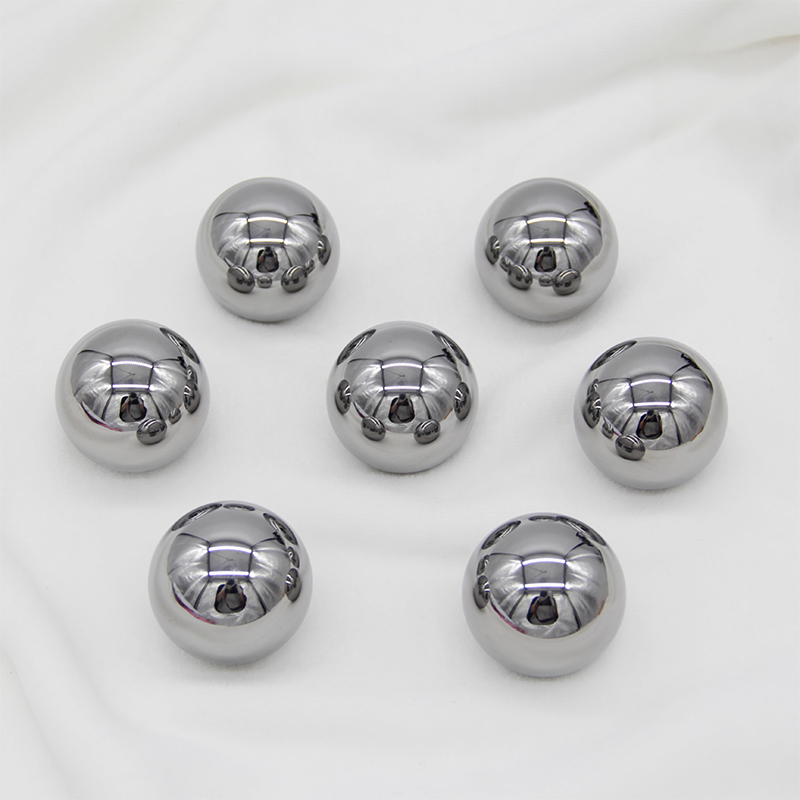
Many ordinary transmission equipment, light-load bearing devices and daily hardware products will give priority to carbon steel balls as core rolling parts. In some low-load rotating structures, these steel balls can maintain a stable operating state for a long time, and will not cause excessive wear to the matching parts during operation. The surface of these steel balls can also be treated with different processes such as electroplating and blackening according to actual needs, so that the steel balls can obtain certain anti-rust capabilities to adapt to more conventional working environments. When the load is not too large and the operation speed is moderate, carbon steel balls can show very high cost performance, making these steel balls the preferred choice for many basic industrial scenarios.
Stainless steel balls
Stainless steel balls are a type of steel balls developed for scenarios with high requirements for anti-corrosion performance, and the main material of these steel balls is stainless steel with different ratios of chromium and nickel. During the processing of these steel balls, the organization structure inside the material will be adjusted through a special smelting process, so that the steel balls can have good anti-rust and anti-corrosion effects when exposed to humid air, weak acid and weak alkali environments. The surface of these steel balls is smooth and delicate, and it is not easy to leave residual impurities, which can meet the strict hygiene requirements of many special industries.
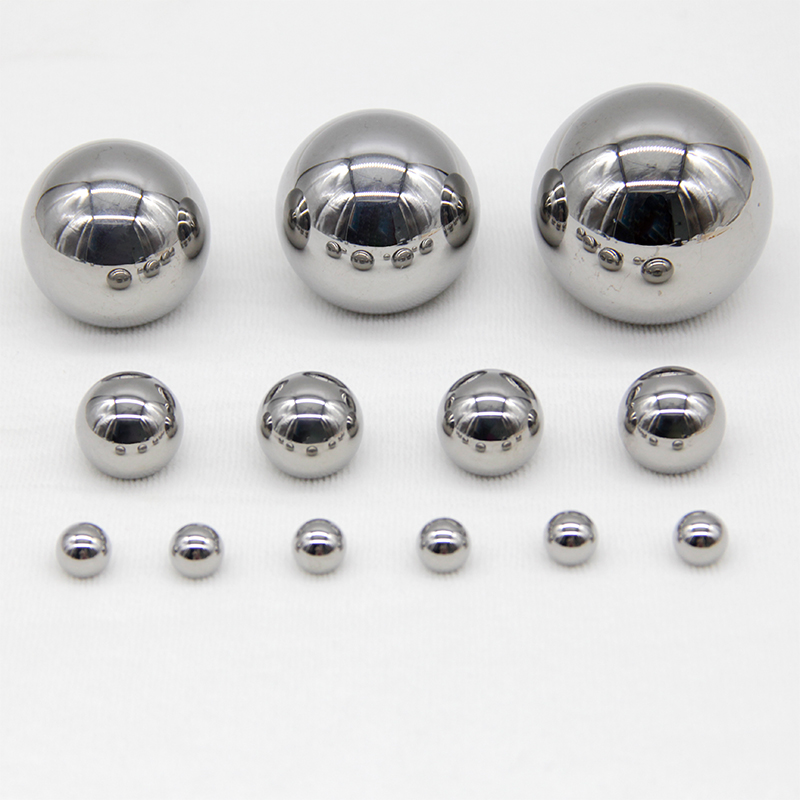
Stainless steel balls are widely used in food processing equipment, medical instruments, chemical fluid transmission devices and outdoor hardware products. In these scenarios, ordinary steel balls are prone to rust and corrosion after long-term use, while these steel balls can maintain a stable surface state for a long time, and will not pollute the contact medium due to material deterioration. Different grades of stainless steel balls can adapt to different levels of corrosive environments, and users can select corresponding steel balls according to the actual contact medium and working temperature. In many precision fields that require both certain mechanical properties and anti-corrosion performance, stainless steel balls have become a very common supporting component, and these steel balls can still maintain a good operating experience after long-term use.
Chrome steel balls
Chrome steel balls are a type of steel balls with significantly improved overall performance after adding chromium element on the basis of steel materials. The addition of chromium element makes the internal structure of these steel balls more uniform and stable, and the surface hardness of the steel balls can be further improved after standardized heat treatment. The wear resistance of these steel balls is far better than that of ordinary carbon steel balls, and the steel balls can still maintain a very low wear rate under high-speed operation and medium and high load conditions. The dimensional accuracy of these steel balls can be controlled within a very small error range after multiple fine grinding processes.
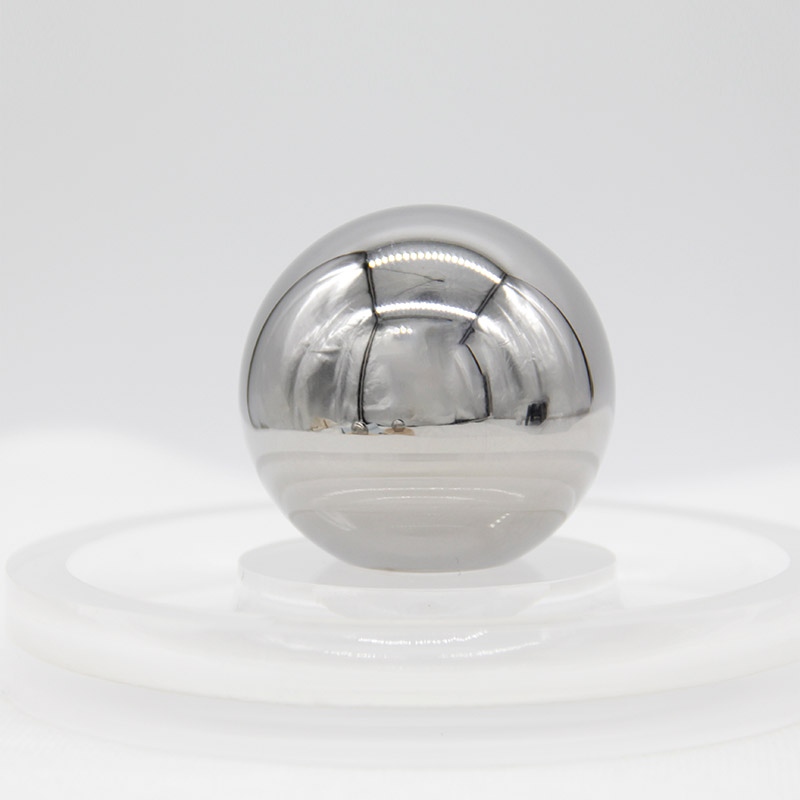
Chrome steel balls are mostly used in medium and high-grade bearing assemblies, precision motor transmission structures, automobile parts and mechanical equipment that runs stably for a long time. When these steel balls are running in the raceway, the contact area can be evenly stressed, which can greatly reduce the friction resistance during operation and make the equipment run more smoothly. The service life of these steel balls is much longer than that of ordinary carbon steel balls under the same working conditions, which can effectively reduce the frequency of part replacement and the maintenance cost of the equipment. In many industrial scenarios that have high requirements for operating stability and service life, chrome steel balls have become a very mainstream choice, and these steel balls have also shown very reliable performance in long-term practical tests.
Alloy steel balls
Alloy steel balls are a type of steel balls made by adding a variety of metal elements to the raw materials according to a specific ratio, and the formula of these steel balls can be adjusted according to the targeted use scenarios. After a special forging or rolling process, these steel balls have very strong impact resistance, and the steel balls will not appear brittle and broken even under frequent strong impact conditions. The overall mechanical properties of these steel balls are far beyond the level of ordinary steel balls, and the steel balls can maintain stable performance even in extremely harsh working environments.
Alloy steel balls are mostly used in heavy-load engineering machinery, mining equipment, grinding equipment and high-strength impact transmission devices. In these scenarios, the steel balls need to bear huge instantaneous load and continuous impact, and ordinary types of steel balls are prone to deformation or damage after a short period of use. These steel balls can still maintain a complete shape and stable performance after long-term operation, which can provide reliable support for the continuous operation of the equipment. Many special working conditions with extremely high requirements for material strength will customize corresponding alloy ratios for steel balls, so that these steel balls can better adapt to the unique working environment and meet the special use needs of the scenario.
Special process treated steel balls
Special process treated steel balls are a kind of steel balls that are further processed on the basis of conventional base materials to obtain more special properties. These steel balls can obtain different surface characteristics through processes such as surface carburizing, quenching, spraying and special polishing. Some of these steel balls have extremely high surface smoothness, some have a special protective layer on the surface, and some have obtained special performance that can adapt to high and low temperature environments after special treatment. The performance of these steel balls can be adjusted in a targeted manner according to the actual use requirements, which can fill the application gaps that cannot be covered by conventional steel balls.
These steel balls are often used in precision instruments, aerospace accessories, special testing equipment and some extreme environment operation structures. In these scenarios, the conventional performance of ordinary steel balls cannot meet the use requirements, and the performance of these steel balls after targeted adjustment can accurately match the operating conditions of the equipment. Many high-precision transmission structures that require extremely high dimensional tolerance will use these steel balls after super finishing, and the steel balls can achieve very small runout during operation, ensuring the overall operation accuracy of the equipment. These special process treated steel balls provide more diversified choices for many fields with special requirements, making the application range of steel balls further expanded.
To sum up, different types of steel balls have their own unique characteristics and applicable scenarios, and all kinds of steel balls play an irreplaceable role in their respective fields. From ordinary carbon steel balls to special process treated steel balls, the continuous innovation of process and material makes the performance of steel balls more and more abundant, and the application scope of steel balls also covers more production and life scenarios. When selecting suitable steel balls, users need to fully consider factors such as load, operating speed, environmental characteristics and cost budget, so that the selected steel balls can exert the best use effect. With the continuous progress of industrial technology, the performance of steel balls will continue to be optimized, and more new types of steel balls will also emerge in the future, bringing more reliable support for the operation of various equipment.