



What is the steel ball
What do a skateboard wheel, a spray paint can, and a car engine have in common? You might not guess it at first. Each one relies on a tiny but mighty component: a steel ball. A steel ball is a precision-engineered sphere made from various steel alloys, serving as a critical component in countless mechanical systems.
The global precision bearing steel ball market is valued at approximately USD 2.8 billion as of 2023.
This fact shows their massive role in modern industry. In this article, you will learn how steel balls are made, what materials they come in, and where they are used. You will also discover why engineers choose them for their durability, precision, and cost-effectiveness.
Key Takeaways
Steel balls are precision spheres that reduce friction and enable smooth motion in machines.
Choose chrome steel for high hardness, stainless steel for corrosion resistance, and carbon steel for cost savings.
Manufacturing involves cold heading, heat treatment, and precision grinding to achieve tight tolerances.
Steel balls are used in bearings, valves, and across industries like automotive, aerospace, and medical devices.
Steel balls offer durability, cost-effectiveness, and customization options for various applications.
What Is a Steel Ball?
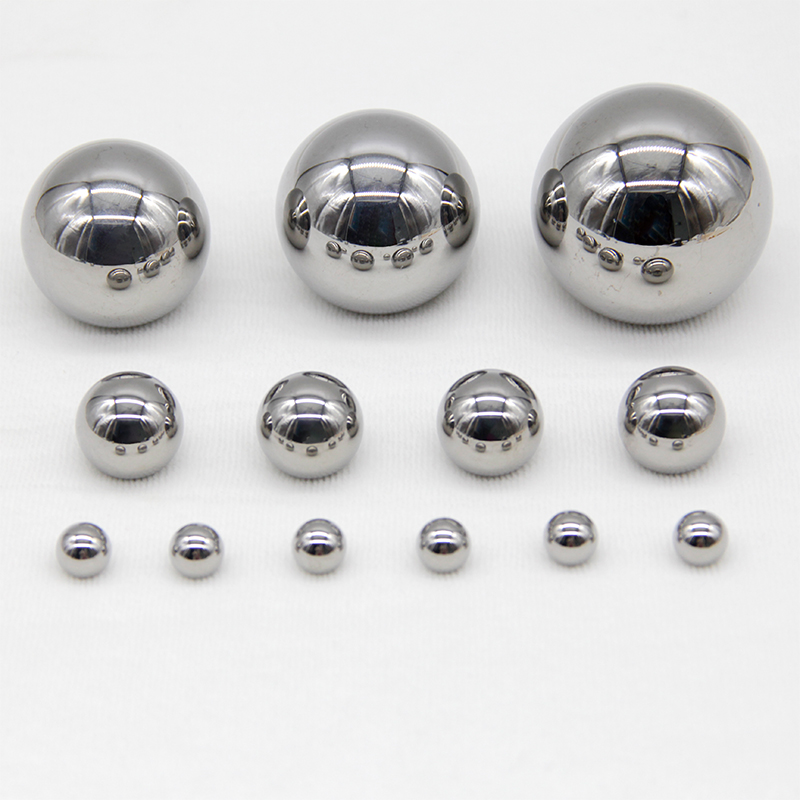
A steel ball is a spherical rolling element engineered to exacting standards. You will find it inside bearings, valves, and countless mechanical systems. Manufacturers produce these spheres from several steel alloys, each chosen for specific performance needs.
Material Composition and Grades
The material you select determines how the ball performs. Chrome steel, known as AISI 52100, stands as the most common choice for precision bearings. This alloy contains about 1% carbon and 1.5% chromium. Those elements create a through-hardened structure with a surface hardness of 60–64 HRC. You get excellent wear resistance and outstanding rolling contact fatigue. That combination makes AISI 52100 ideal for high-load applications like automotive systems and precision machinery.
Stainless steel offers another popular option. The 300 series, including grades 304 and 316, provides superior corrosion resistance. You would choose these for marine equipment or medical devices where rust poses a threat. The 400 series, such as 420 and 440C, delivers higher hardness while retaining moderate corrosion resistance. Carbon steel grades, from low 1010 to high 1085, present a cost-effective solution. You can request heat treatment to boost their hardness when needed. Tool steel, specifically AISI S2, provides extreme shock resistance for demanding environments like oil drilling equipment.
Manufacturers like INYOO offer this full range of materials. You can specify the exact grade that matches your application requirements.
Material Type | Key Property | Typical Use |
|---|---|---|
Chrome Steel (AISI 52100) | Hardness 60–64 HRC, high load capacity | Bearings, automotive |
Stainless 300 Series | Excellent corrosion resistance | Medical, marine |
Stainless 400 Series | Higher hardness, moderate corrosion resistance | Valves, instruments |
Carbon Steel | Cost-effective, heat-treatable | General industrial |
Tool Steel (AISI S2) | Extreme shock resistance | Mining, drilling |
Manufacturing and Quality Control
You might wonder how a simple sphere achieves such precision. The process starts with wire drawing and cold heading. Steel wire gets drawn to a specific diameter, then cut to length. A cold heading machine feeds that wire into a die, forming a rough sphere with excess material called flash.
Next comes flashing. You place the balls between two cast iron plates with grooves. Pressure and rolling action remove the flash. This step repeats until the balls become truly round.
Heat treatment follows. The balls pass through a fully automatic furnace with controlled temperature and atmosphere. They heat, then quench quickly in oil. Tempering follows to balance hardness with toughness. You end up with a ball that resists wear without becoming brittle.
Grinding and lapping complete the process. Multi-stage precision grinding controls diameter and tolerance. Fine lapping then polishes the surface to a mirror finish. This reduces friction and noise during operation.
Quality control plays a critical role throughout. Reputable manufacturers hold IATF 16949 and ISO 9001 certifications. These standards ensure consistent process monitoring and inspection. You can request precision grades from G10 to G1000. A G10 ball offers extremely tight tolerances for high-speed bearings. A G1000 ball suits less demanding applications. Full traceability is ensured through certifications like IATF 16949 and ISO 9001.
The manufacturing process transforms raw wire into a precision component. Each step builds upon the previous one. The result is a steel ball you can trust for consistent roundness, hardness, and dimensional accuracy.
Primary Uses of Steel Balls
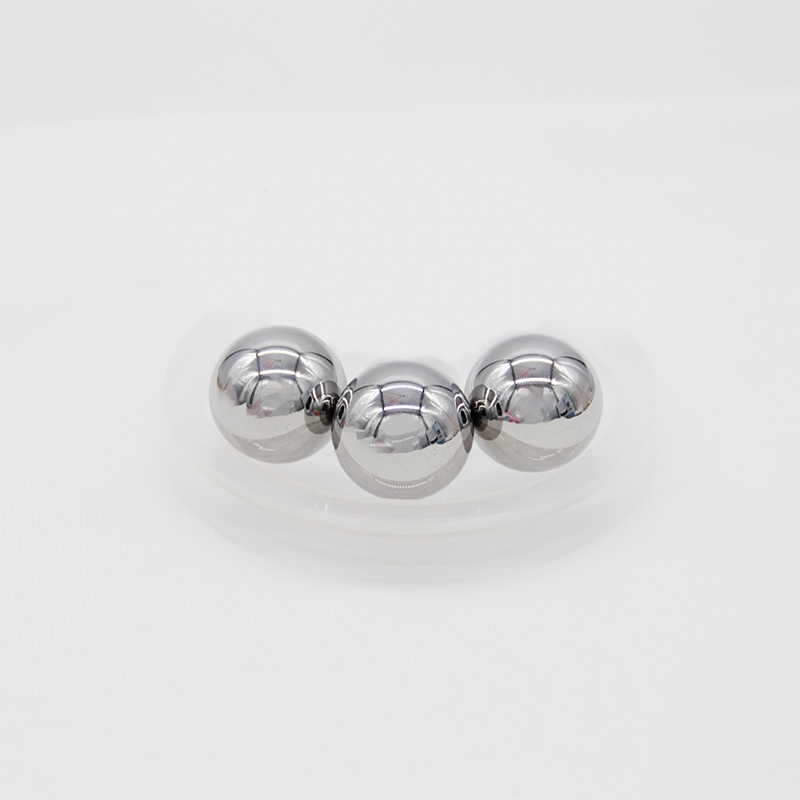
You will find steel balls working behind the scenes in nearly every mechanical system around you. Their spherical shape allows them to roll smoothly, carry heavy loads, and seal tight openings. These qualities make them indispensable across countless applications. Let us explore where they matter most.
In Bearings and Valves
The most common use for a steel ball is as a rolling element inside ball bearings. A bearing reduces friction between moving parts. Imagine two metal surfaces sliding against each other. They generate heat, wear down quickly, and waste energy. Now place steel balls between those surfaces. The balls roll instead of slide. This rolling action cuts friction dramatically. Machinery runs smoother, lasts longer, and consumes less power. You will find this design in electric motors, gearboxes, conveyor systems, and bicycle hubs.
Steel balls also serve as sealing components in check valves. A check valve allows fluid to flow in one direction only. Inside the valve body, a spherical ball rests against a conical seat. When forward flow pushes through, the ball lifts off the seat. When flow reverses, the ball drops back onto the seat. This action seals the line and prevents backflow. The design is simple, robust, and low-maintenance. You can customize the ball's weight and material to match system pressures and temperatures. Typical applications include vertical pipelines, slurry handling, sewage treatment, and systems carrying particulate solids. The spherical shape guarantees a tight seal every time.
Across Diverse Industries
Steel balls extend far beyond bearings and valves. Several industries consume them in massive quantities. The leading sectors globally include:
Automotive
Industrial machinery
Aerospace
Consumer electronics
Each sector relies on steel balls for different reasons. The table below shows specific applications in key industries.
Industry | Specific Applications |
|---|---|
Automotive | Bearings, suspension systems, steering mechanisms |
Aerospace | Aircraft bearings and essential components (G10 grade) |
Medical Devices | Surgical instruments and imaging devices |
Material selection depends heavily on the operating environment. You would choose stainless steel balls for applications requiring corrosion resistance or medical devices. The 300 series offers excellent corrosion resistance. The 400 series provides higher hardness for applications requiring higher hardness. Carbon steel balls suit general industrial use where cost matters most. Tool steel balls handle shock loads in oil drilling equipment.
Manufacturers like INYOO supply the full range. They offer diameters from 0.8 mm to 45 mm. Precision grades range from G10 for high-speed aerospace bearings to G1000 for less demanding roles. This flexibility ensures you always have a steel ball that fits your exact needs.
Advantages of Using Steel Balls
Durability and Cost-Effectiveness
Steel balls deliver exceptional strength and hardness. This inherent toughness provides excellent wear resistance. You get a long service life even under demanding conditions. For high-load applications, this durability translates directly into cost savings. You replace parts less often. You reduce downtime. You lower your total operating expenses.
The cost advantage becomes clear when you compare materials. Steel balls cost less to manufacture than ceramic alternatives. This makes them the economical choice for bulk purchasing and cost-sensitive projects. For low or medium-speed machinery, steel delivers sufficient performance at a fraction of the price. Ceramic balls only justify their higher upfront cost in harsh environments or high-speed precision equipment. There, their longer life and lower maintenance offset the premium over time.
Consider the service life data. A deep-groove ball bearing with steel balls achieves an L10 life of 1,000–3,000 hours at rated load. A cylindrical roller bearing lasts 5,000–10,000 hours. A plain bronze bushing has no fatigue life at all—it simply wears out. Under a high radial load of 9,000 N, a deep-groove ball bearing reaches approximately 9,600 hours of L10 life. That represents just over one year of continuous operation.
Heavy radial loads favor cylindrical roller bearings over ball bearings. Steel-ball bearings are not the optimal choice for high-load applications. They will have comparatively shorter service life.
You should match the bearing type to your specific load profile. For moderate loads, a steel ball offers the best balance of cost and durability.
Precision and Customization
You can achieve remarkable precision with steel balls. Manufacturers produce them in grades from G10 to G1000. A G10 ball offers extremely tight tolerances for high-speed bearings. The table below shows the highest precision grades available by material.
Material | Highest Precision Grade | Surface Treatments |
|---|---|---|
Chrome Steel (AISI 52100) | G10 | Fine grinding, lapping, polishing, oiled or protected |
Stainless Steel (various grades) | G10 | Polished, heat-treated, passivated, clean/dry |
Carbon Steel (AISI 1010/1015/1085) | G100 | Polished, oiled, zinc/copper/nickel plated |
You can customize diameter, hardness, tolerance, surface finish, and packaging. Suppliers like INYOO provide full traceability in accordance with IATF 16949 and ISO 9001 standards. You also get options for ceramic balls when your application demands specialized properties. This flexibility ensures you always find the right steel ball for your exact needs.
A steel ball is a precision sphere that rolls smoothly or seals tightly. You find it inside bearings, valves, and countless machines. These tiny components work everywhere, from massive mining equipment to delicate surgical tools.
Steel balls offer real advantages. They resist wear, maintain exact dimensions, and cost less than alternatives. You get reliable performance without breaking your budget.
Future technologies will still depend on these simple spheres. Electric vehicles, robotics, and renewable energy systems all need precision rolling elements. Next time you ride a skateboard or open a drawer, remember the steel ball working quietly inside. This humble component keeps modern industry moving forward.
FAQ
How do I choose the right steel ball material?
Match the material to your operating environment. Chrome steel suits dry, high-load applications. Stainless steel resists corrosion in wet or medical settings. Carbon steel offers budget-friendly performance for general use. Tool steel handles heavy shocks. Consider temperature, moisture, and load before deciding.
What does the precision grade G10 to G1000 mean?
The grade number indicates tolerance. A G10 ball has extremely tight dimensional control. You would select it for high-speed bearings or aerospace parts. A G1000 ball allows more variation. It works fine for casters, slides, or grinding media. Lower numbers mean higher precision.
Can I request custom sizes and surface finishes?
Yes. Manufacturers like INYOO accept custom specifications. You can choose diameter, hardness, tolerance, and surface treatment. Options include polished, plated, or coated finishes. You can also specify packaging requirements. Production time is customized based on your requirements.
How do I verify the quality of a steel ball supplier?
Look for IATF 16949 and ISO 9001 certifications. These standards confirm consistent process control. Ask for proof of certifications such as IATF 16949 and ISO 9001. A reliable supplier will share inspection data and process monitoring results without hesitation.