
How to find a reliable stainless steel ball supplier in China
China's vast supplier pool makes reliability hard to judge at a glance. The country produced over 40.8 million metric tons of stainless steel in 2025, or 64 percent of global output, so genuine factories and trading intermediaries often look alike online. You need a repeatable method, not a lucky guess.
This guide gives you a practical due-diligence roadmap. You will define your technical requirements, research and shortlist candidates, verify credentials, and assess sample quality. Then you will evaluate cost and contract terms, negotiate clear quality clauses, and manage the relationship for the long term. Follow these steps, and you can select a stainless steel ball supplier with confidence.
Key Takeaways
Define your technical requirements clearly to narrow down suppliers and get accurate quotes.
Verify supplier credentials through official records and certifications to avoid scams.
Test samples and arrange third-party inspections to ensure quality before bulk orders.
Compare total costs and negotiate clear quality clauses to protect your interests.
Maintain regular communication and performance reviews to build a long-term partnership.
Define Needs and Research Suppliers
Specify Technical Requirements
A clear specification sheet is your first defense against mismatched deliveries. Write down four things before you contact any stainless steel ball supplier: material grade, ball size, grade and tolerance class, and expected order volume. Each choice narrows the field of capable factories and gives you a fair basis for comparing quotes.
Material grade deserves the most thought, because it ties directly to your operating environment. The table below maps common grades to their best-fit applications.
Grade | Best fit |
|---|---|
High wear resistance and high load, such as precision bearings | |
Balanced strength, wear resistance, and corrosion resistance | |
Chloride-rich settings, including chemical processing and saltwater | |
Humid and mildly corrosive environments | |
Highly corrosive conditions with acids and chlorides |
Size, grade, and tolerance work as a set. A tight tolerance class raises cost, so specify only what your application truly needs. Volume matters too, since it shapes minimum order quantities and production scheduling later.
Shortlist Through Multiple Channels
Cast a wide net first, then narrow it. Online B2B platforms give you quick visibility into product ranges and export experience. Trade shows let you meet factory representatives face to face and judge their technical depth. Industry referrals from peers often surface suppliers with proven track records. Direct contact through WhatsApp or WeChat works well for OEM discussions and fast technical questions.
Aim for a shortlist of three to five candidates before deeper vetting. This range gives you real comparison without drowning in options. Record each candidate's location, product scope, and response speed in a simple spreadsheet. A fast, detailed reply to your specification sheet is an early signal of a well-run operation.
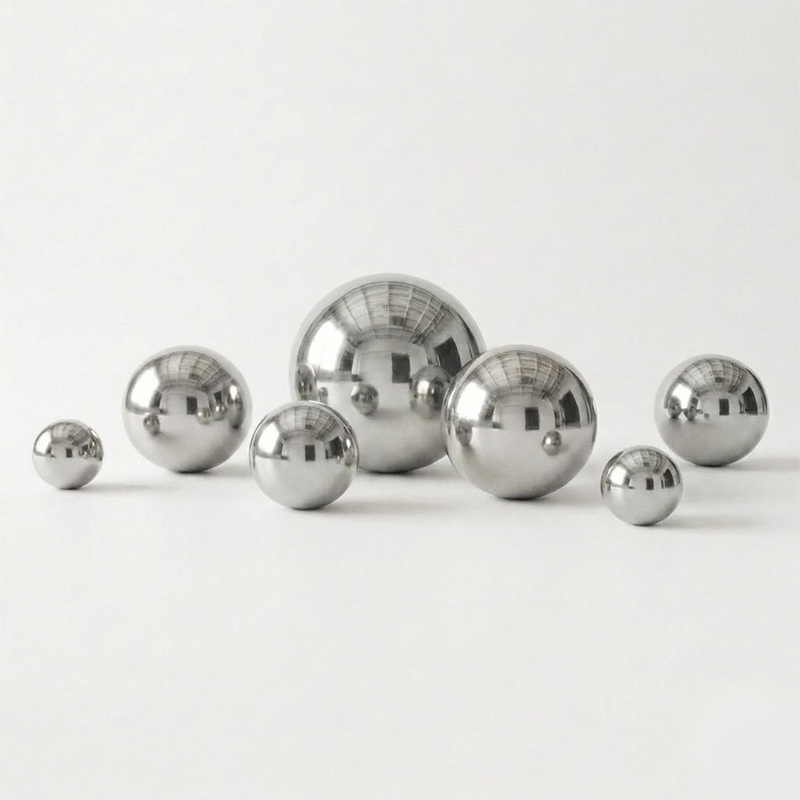
AISI 316 / 316L Stainless Steel Balls
AISI 316 stainless steel balls provide enhanced corrosion resistance compared to 304, particularly in chloride-containing and saltwater-exposure environments. With added molybdenum, 316 stainless steel balls are suitable for chemical processing and corrosion-sensitive applications requiring long-term reliability.
View Product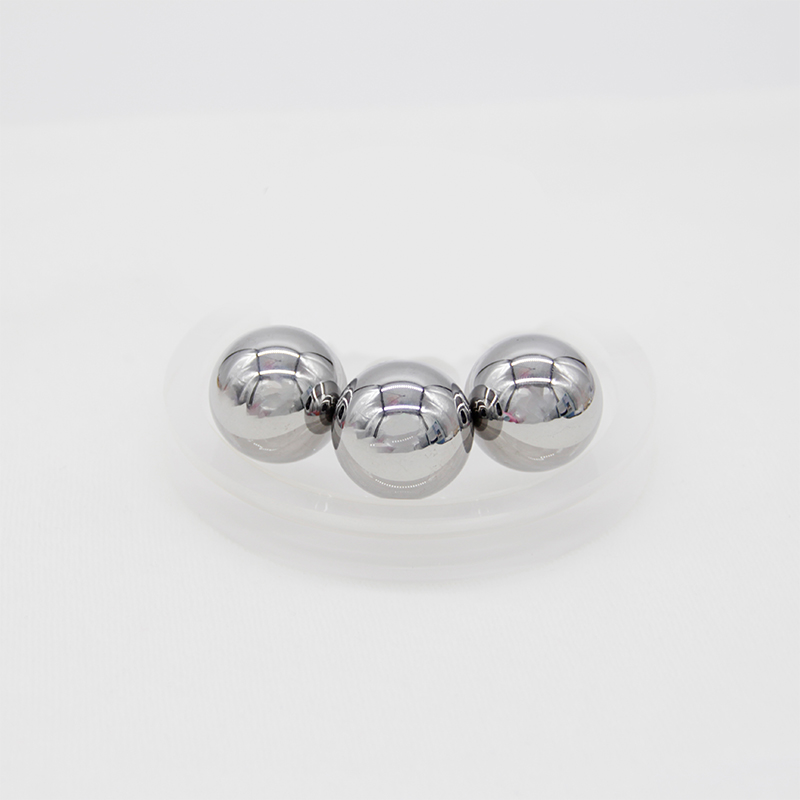
AISI 304 / 304L Stainless Steel Balls
AISI 304 stainless steel balls provide reliable corrosion resistance in humid and mildly corrosive environments. With stable austenitic structure and consistent performance, 304 stainless steel balls are widely used in industrial applications requiring durability and cleanliness.
View Product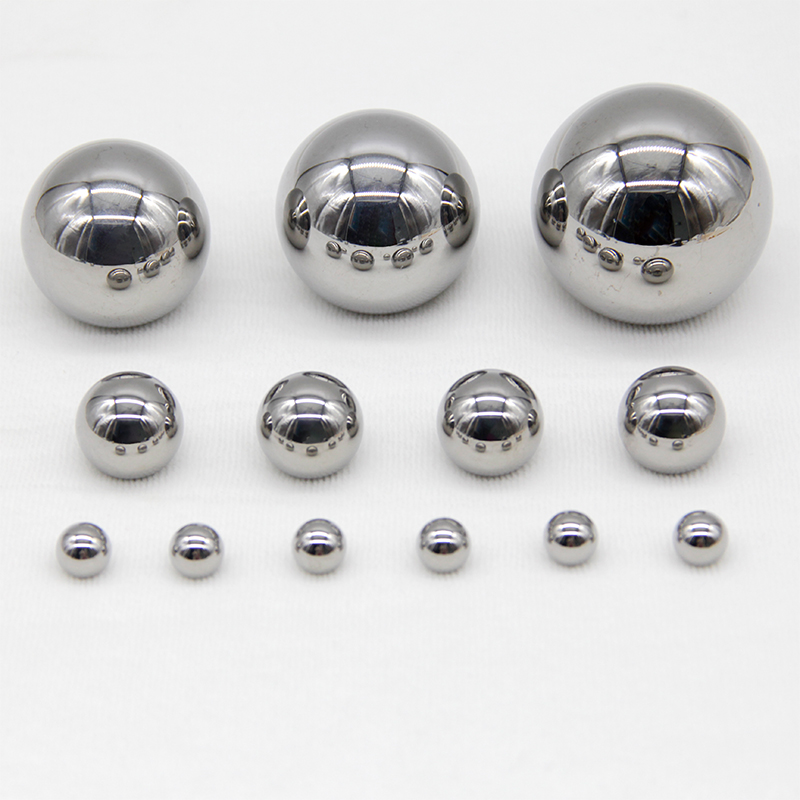
AISI 420 / 420C Stainless Steel Balls
AISI 420 and 420C stainless steel balls are martensitic stainless steels that can be hardened to achieve high strength and wear resistance. 420C stainless steel ball offers higher hardness due to increased carbon content, while 420 stainless steel ball provides relatively better corrosion resistance and toughness.
View ProductVerify a Stainless Steel Ball Supplier's Credentials
Check Licenses and Certifications
Start with the legal identity of the company. Ask for the business license and record two items: the exact Chinese company name and the Unified Social Credit Code. Chinese licenses come in several forms, including the Limited Liability Company, the Company Limited by Shares, and the Wholly Foreign-Owned Enterprise. The entity type tells you what kind of organization you are dealing with.
Next, verify the record independently on GSXT, the National Enterprise Credit Information Publicity System at www.gsxt.gov.cn. Enter the company name or credit code, select the matching result, and compare the displayed record against the license copy you received. Cross-check the legal representative, registered capital, business scope, and company status. The status should read in operation or in business, meaning active and operating. Check the status separately rather than inferring it from the license image. Then match the verified entity to the contract, invoice, and payment beneficiary.
ISO 9001 certification deserves the same scrutiny. Confirm the certificate is currently valid, since these certificates typically run three to five years. Confirm the issuing body is accredited and the scope covers your specific product category. Treat an expired certificate, or one issued for a different product category, as a red flag. A refusal to share certificate copies is grounds for disqualification.
When the order value justifies the expense, commission a factory audit. A useful audit report classifies findings as critical, major, or minor, records document verification on camera, and covers each production zone from raw material intake to export packing. It also assigns an owner and deadline to every major finding. Request trade references from other international buyers as a final check.
Test Samples and Inspect Quality
Request full material test reports before you commit. These reports should confirm the grade you specified and cover the parameters that matter for balls: diameter tolerance, roundness or sphericity, hardness, metallographic structure, surface roughness, crush load, vibration, and batch traceability. Reputable suppliers test against recognized standards such as ISO 3290, which explicitly covers diameter variation, spherical form deviation, surface roughness, and lot diameter variation. Ask for reports per lot.
Sample testing comes next. Send the supplier your material type, diameter, precision grade, and required sample quantity so they can prepare the samples. Confirm availability, preparation time, sample cost, and shipping arrangements up front. Use the samples for dimensional checks, assembly trials, and application evaluation. Agree on acceptance criteria and any inspection reports before you confirm the order.
For bulk orders, arrange third-party inspection before shipment. The inspector should check finished batches against the agreed criteria, including dimensional measurements, surface inspection, hardness verification, and packaging and label checks. This step protects you when you cannot visit the factory yourself, and it gives a reliable stainless steel ball supplier a chance to prove its process control.
Evaluate Cost and Contract Terms
Compare Pricing and MOQ
Price alone tells you little. Compare quotes on the same specification sheet, then look at the full cost picture. Ask each candidate for its minimum order quantity, payment terms, and factory lead time alongside the unit price. A low unit price paired with a long lead time or a large upfront payment can cost you more than a slightly higher quote with better terms.
Weigh the trade-offs openly. A high MOQ may lower your unit cost, yet it ties up capital in stock you cannot use yet. Short lead times help you respond to demand, and they often reflect spare production capacity. Payment terms matter just as much. A deposit-plus-balance structure is common, so confirm the percentages and the trigger for each payment. Put every quote into one comparison sheet, and rank candidates on total landed cost rather than price alone. This approach keeps your evaluation fair to every stainless steel ball supplier on your shortlist.
Negotiate Clear Quality Clauses
Verbal assurances do not protect you. Put the agreement in writing, and make the quality clauses specific. Reference the grade, tolerance class, and test standards you agreed during sampling. State your inspection rights plainly, including the right to arrange third-party inspection before shipment and to reject nonconforming lots.
Dispute-resolution terms deserve equal care. Choose a mechanism that fits the dispute: mediation for matters open to facilitated settlement, arbitration for cross-border enforcement, or litigation where court proceedings serve you better. Many contracts also require senior executives to discuss the issue before formal action begins. For arbitration, specify the rules (such as ICC or UNCITRAL), the seat, and the language of proceedings. Name the governing law and the jurisdiction, define how a dispute starts, and set notice periods. Address confidentiality and cost allocation too. A clear clause turns a potential conflict into a manageable process.
Manage the Supplier Relationship
Maintain Communication and Reviews
A signed contract starts the relationship; it does not finish it. Set a regular communication rhythm with your stainless steel ball supplier. A short weekly update on open orders and a monthly call on quality and delivery keep small issues from growing. Ask for a named contact and a backup, so a single absence never stalls your orders.
Back that rhythm with periodic performance reviews. Score the supplier on a small set of measures, and share the results openly.
KPI | What it measures | Alert threshold |
|---|---|---|
On-time delivery | Orders arriving by the due date | Below 95% |
Defect rate | Share of received material failing inspection | Above 1% |
Order accuracy | Correct SKU, quantity, and specs | Below 99% |
Lead time | Days from PO to receipt | More than 10% over plan |
Responsiveness | Reply speed and issue resolution | Missed service commitment |
Review the scores each quarter. A missed threshold triggers a root-cause review, not a penalty. This habit turns a routine purchase into a managed partnership.
Plan Logistics and Improvement
Plan shipping before the first bulk order. Confirm the packaging that suits your line: dry packaging for oil-packed balls, or rust-proof paper, plastic bags, iron drums, and pallets for long sea transit. Standard cartons on pallets work well for smaller volumes. Stock items typically ship in 3–5 days, while made-to-order batches need 20–30 days, so track lead time against plan and replan supply when it drifts.
Build a feedback loop for continuous improvement. Use inspection data as a quality metric, and feed every corrective action back to the supplier. Engage them early on drawing and machining questions, where their technical input can cut cost. A supplier that answers within 24 hours and accepts returns on faulty batches gives you reliable channels to surface problems. Treat each order as a step in a long partnership, and the relationship compounds in value.
You now have a repeatable path: define requirements, research candidates, verify credentials, assess sample quality, compare cost and terms, sign clear quality clauses, and manage the relationship. Due diligence separates reliable partners from risky ones. Shortcuts save a week and cost you a year.
Looking For Reliable Precision Steel Ball Manufacturer?
Huari is a professional factory specializing in full-range precision steel balls. We supply chrome steel balls, stainless steel balls, carbon steel balls and custom special metal balls, with stable roundness and hardness, widely used in bearings, automotive, valves, instruments and industrial transmission fields, OEM & ODM service available.
Treat supplier selection as an ongoing process, not a one-time transaction. Buyers who push only on price and depersonalize communication get low priority and lighter quality checks. Invest in the relationship instead.
Trust is earned through performance.
Choose a stainless steel ball supplier you can grow with. Consistent quality and honest communication build partnerships that reward both sides for years.
FAQ
What should I expect for minimum order quantities?
MOQ varies by grade, size, and whether the item is stocked or made to order. Ask each candidate for its MOQ alongside unit price, payment terms, and lead time. Compare total landed cost rather than price alone.
Can I request samples before placing a bulk order?
Yes. Send your material type, diameter, precision grade, and sample quantity. Confirm availability, preparation time, sample cost, and shipping up front. Test the samples for dimensions, assembly fit, and application performance before you commit.
How long does production and shipping take?
Stock items typically ship in 3–5 days. Made-to-order batches need 20–30 days. Track lead time against plan and replan your supply when it drifts.
What if a batch fails inspection?
Reference your written quality clauses, including inspection rights and rejection terms. A reliable stainless steel ball supplier accepts returns on faulty batches and answers within 24 hours. Trigger a root-cause review and feed the corrective action back to the supplier.