



How much do steel balls cost
How much do steel balls cost? Prices range from a few cents per unit for low-carbon steel balls to several dollars for high-precision chrome steel balls. Wholesale grinding balls typically cost $550 to $850 per metric ton.
Your final cost depends on material, size, precision, manufacturing process, and order quantity. Each factor shifts the price significantly. For example, a larger diameter or tighter tolerance raises per-unit cost.
This post breaks down those factors with realistic price references. You will learn what drives costs and how to budget effectively. By the end, you can compare options with confidence and choose the right steel ball for your application.
Key Takeaways
Choose the right material based on your application needs to balance cost and performance.
Match precision grade to your actual requirements to avoid paying for unnecessary tight tolerances.
Buy in bulk to lower per-unit costs, but plan for storage and lead times.
Consider total cost of ownership, including wear and replacement frequency, not just the initial price.
Work with a certified supplier to ensure consistent quality and traceability.
Steel Ball Material and Grade Impact
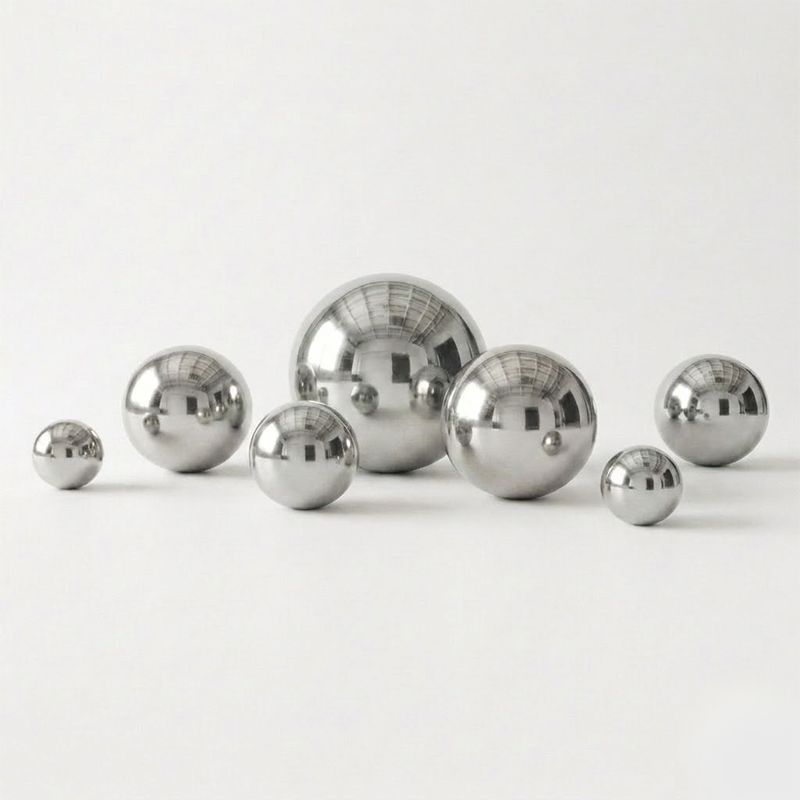
The material you choose sets the baseline for your steel ball cost. Each alloy brings different properties—hardness, corrosion resistance, or shock tolerance—and those properties directly shape the manufacturing difficulty and final price. You need to match the material to your application's demands, not just pick the cheapest option.
Chrome Steel, Stainless, and Carbon Steel
Chrome steel (AISI 52100) stands as the most common choice for precision bearings. This alloy delivers high hardness and excellent wear resistance, making it ideal for rotating components that face constant friction. The manufacturing process requires tighter temperature control during heat treatment, which raises production costs. For example, a 1/4 inch chrome steel ball carries a base unit price of $0.05. If you order 1,000 units, you receive a 30% discount, dropping the per-unit cost to $0.035. That brings your total to $35.00 for the batch. This price reflects the material's superior fatigue life and dimensional stability.
Stainless steel balls come in two main families. The 300 series offers outstanding corrosion resistance, which suits marine equipment, medical devices, and food processing machinery. The 400 series trades some corrosion resistance for higher hardness, making it useful for valve components and wear-prone parts. Stainless steel costs more than chrome steel because the alloying elements—nickel and chromium—drive up raw material expenses. You also face longer machining cycles since stainless steel work-hardens quickly during grinding.
Carbon steel provides the most economical entry point. Low-carbon steel (1010) works well for slides, casters, and light-duty applications where surface hardness matters less. High-carbon steel (1085) can undergo hardening to improve wear resistance, yet it still costs less than chrome or stainless grades. You sacrifice corrosion resistance and precision, but you gain significant savings for bulk applications. Tool steel (AISI S2) sits at the premium end. This material absorbs heavy shock loads without cracking, which makes it essential for oil drilling, mining equipment, and impact-prone assemblies. The specialized heat treatment and forging processes push its price well above standard alloys.
Precision Grades and Cost Implications
Precision grade determines how perfectly round each ball is and how tightly its diameter stays within tolerance. The grading scale runs from G10 to G1000, where lower numbers mean tighter tolerances and higher costs. You pay for extra grinding passes, slower production speeds, and more rigorous inspection at every step.
The table below shows how grade selection affects your budget:
Precision Grade | Precision Level | Cost Implication |
|---|---|---|
G10, G16 | Highest precision | Highest cost; for critical performance, noise control, and fatigue life |
G25, G40 | High precision | High cost; for bearing and precision applications |
G100 | Medium-high precision | Balanced cost; good for many industrial uses |
G200–G500 | Medium precision | More economical; for casters, sliding systems, general components |
G1000+ | Lowest precision | Most cost-effective; for low-speed, non-bearing bulk use |
Selecting a grade that exceeds your needs wastes money. A G10 ball for a simple drawer slide adds unnecessary expense. Conversely, choosing G1000 for a high-speed spindle invites premature failure. You should match the grade to the operational demands. For budget-sensitive projects, G200 to G500 offers stable performance at a fraction of the cost. For critical rotating equipment, invest in G10 or G16 despite the premium. The right grade balances your performance requirements against your total budget, ensuring you get the most value from every steel ball you purchase.
Size and Tolerances Influence on Pricing
Diameter and Weight Effects
Size drives cost more directly than any other factor. A larger steel ball requires more raw material, plain and simple. Double the diameter, and you multiply the volume by eight. That means eight times more steel feeds into each ball. Your material cost climbs at the same rate.
Manufacturing time also stretches with size. Larger balls need longer heating cycles during forging or heading. Grinding passes take more time because you remove more surface material. Each production step slows down, and slower production raises your per-unit price. For example, a 1/8 inch ball costs fractions of a cent. A 1/2 inch ball from the same material might cost ten to twenty times more per unit. You pay for the extra steel and the extra machine time.
Weight affects shipping costs too. Heavier balls add freight charges, especially for international orders. A metric ton of small balls contains millions of units. The same ton of large balls holds far fewer pieces. Your per-piece shipping cost rises with diameter, even though your per-ton rate stays constant.
Tolerance Levels and Their Cost
Tolerance levels control how round each ball is and how consistent its diameter remains. The grading system runs from G10 to G1000. Lower numbers mean tighter tolerances. Tighter tolerances mean more grinding passes and slower production speeds.
A G10 ball requires precision grinding on specialized equipment. Operators must measure each ball individually and reject any that fall outside the specification. This inspection process adds labor and time. A G1000 ball, by contrast, moves through production quickly. Standard grinding equipment handles it without special attention. Quality checks sample batches rather than inspecting every unit.
The cost gap between grades can reach several hundred percent. You might pay $0.05 for a G1000 ball and $0.15 or more for the same size in G10. The premium buys you smoother operation, longer bearing life, and quieter performance. For high-speed spindles or precision instruments, that investment pays off. For drawer slides or casters, it wastes money.
Match your tolerance grade to your actual performance needs. Over-specifying tolerance inflates your budget without adding value to your application.
Your ordering quantity also interacts with tolerance costs. Tight-grade balls require more frequent machine calibration and tooling replacement. Manufacturers spread these costs across your order. Smaller orders carry higher per-unit premiums for precision grades. Bulk orders dilute those fixed costs, narrowing the price gap between grades.
Manufacturing Process and Cost Breakdown
Understanding how manufacturers produce steel balls helps you see where your money goes. Each production step adds labor, machine time, and energy costs. Raw materials consume the largest share of expenses, accounting for 55 to 65 percent of total manufacturing costs. Utilities such as electricity and water add another 14 to 18 percent. The remaining 22 to 32 percent covers labor, equipment maintenance, and profit margins. This breakdown explains why material selection and order volume matter so much to your final price.
Cold Heading, Forging, and Grinding
The manufacturing journey starts with wire or rod stock cut into precise blanks. Cold heading presses these blanks into rough spherical shapes at room temperature. This method works efficiently for smaller diameters and produces consistent results. Larger steel balls require hot forging instead. The heated metal becomes more malleable, allowing the press to shape bigger diameters without cracking.
Grinding transforms these rough spheres into accurate balls. The process removes surface imperfections and brings the diameter closer to specification. Each grinding pass uses progressively finer abrasives. Tighter precision grades demand more passes, which extends production time. A G10 ball might undergo several additional grinding cycles compared to a G1000 ball. Those extra cycles explain the price gap between precision grades.
Heat Treatment, Quality Control, and Certifications
Heat treatment hardens the steel ball to achieve its final mechanical properties. The process involves heating balls to precise temperatures, then quenching and tempering them. Chrome steel requires careful temperature control to reach optimal hardness without becoming brittle. Carbon steel balls may skip hardening entirely for budget applications, which lowers their cost.
Quality control adds another layer of expense. Reputable manufacturers like CHANGZHOU HUARI STEEL BALL CO., LTD. hold IATF 16949 and ISO 9001 certifications. These standards demand rigorous inspection systems and documented process control. Advanced optical sorters check every ball for surface defects. Dimensional gauges verify diameter and roundness. Each inspection step catches defective units before shipment, protecting your production line from costly downtime.
These certifications and inspection systems raise manufacturing costs. However, they deliver measurable value through consistent quality and full traceability. You receive Material Test Certificates with every order, confirming the steel ball meets your specifications. For critical applications in automotive or bearing industries, this documentation proves essential for your own quality audits.
Quantity, Packaging, and Custom Orders
Bulk Discounts and Minimum Orders
Ordering in bulk cuts your per-unit cost significantly. Wholesale grinding balls typically range from $550 to $850 per metric ton. The exact price depends on your order volume.
Your order size directly affects the price per metric ton. If you order 1 to 5 tons, you face a higher per-ton price with less room for negotiation. Most suppliers set a minimum order quantity at around 20 tons. At this volume, you receive the standard wholesale rate. For mining-scale operations ordering 100 to 1,000 tons, the per-ton cost drops further. Production, packaging, and logistics efficiencies drive these savings.
Different ball types carry different price brackets at wholesale. Low-chrome cast balls cost $450 to $550 per metric ton. Standard forged steel balls range from $550 to $650. Higher-grade forged balls run $650 to $850. High-chrome cast balls fall between $600 and $750. Premium or specialized specifications can reach $850 to $1,100 or more per metric ton.
Larger orders reduce your unit price, but excess inventory creates hidden costs. Storage fees and tied-up working capital can offset your savings. The optimal order quantity depends on your actual consumption rate, delivery schedule, storage capacity, and supplier lead time. For CHANGZHOU HUARI STEEL BALL CO., LTD., standard production and delivery takes 15 to 20 days. Plan your orders to match this timeline.
Custom Specifications and Lead Time
Custom specifications give you a steel ball tailored to your exact application. You can request a custom size, precision grade, material, or packaging. These modifications increase the cost but deliver performance that off-the-shelf products cannot match.
The company offers custom solutions across its entire product line. Your engineers collaborate with their team to confirm the best option. Custom orders require additional setup time, material sourcing, and possibly new tooling. These factors raise the price above standard catalog items.
Lead time for custom orders varies significantly. Standard orders from the company ship within 15 to 20 days. However, large custom orders, especially for stainless steel balls, can require up to 90 days. This longer timeline includes material sourcing, manufacturing, heat treatment, and quality inspection. You must account for this when planning your production schedule.
Several factors influence pricing for custom orders. Precision grade plays a major role. A G10 grade costs considerably more than a G100 grade. The minimum order quantity also matters. For many custom stainless steel balls, the MOQ stands at 50,000 units. Freight weight adds another cost layer. Large orders are heavy, and shipping expenses can become substantial.
Custom specifications offer clear benefits when standard products fall short. You pay more upfront, but you gain a product that performs exactly as needed. This investment often pays for itself through reduced wear, longer service life, and fewer replacements.
Steel Ball Price Range Reference
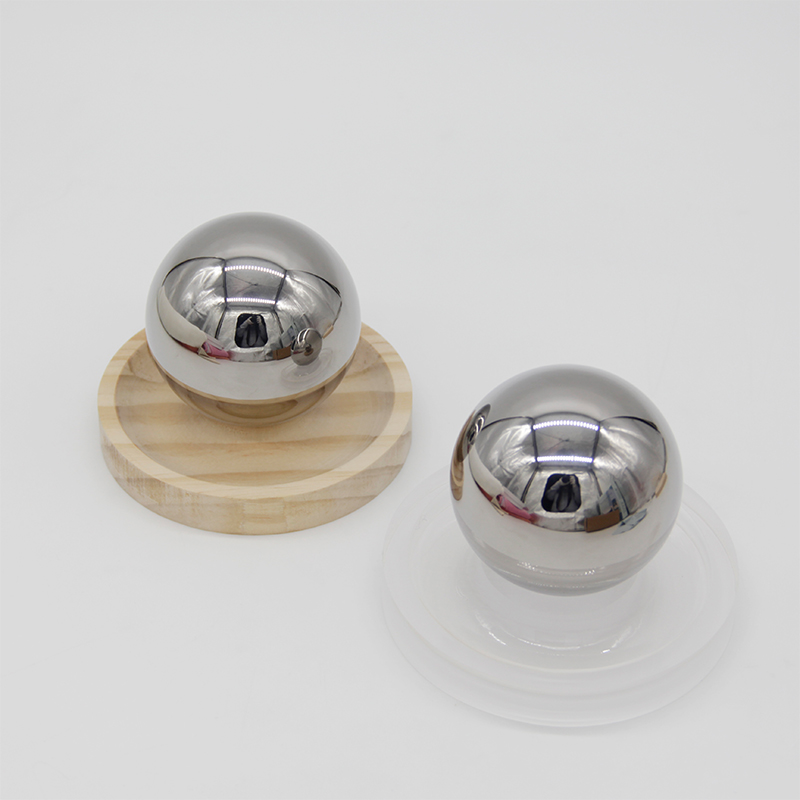
Typical Prices for Common Sizes and Materials
Your per-unit cost shifts dramatically with the size and material you select. A 1/4 inch chrome steel ball from our product line carries a base unit price of $0.05. This figure gives you a useful benchmark for comparing other options.
Smaller diameters cost less. A 1/8 inch ball requires far less raw material and shorter production cycles. Its price falls substantially below the 1/4 inch benchmark. Larger balls cost considerably more. A 1/2 inch ball contains eight times the volume of a 1/4 inch ball. Its material cost alone multiplies by the same factor. You can expect a price several times higher than the smaller reference.
Material choice further shifts the price. Stainless steel balls cost more than chrome steel at every size. The nickel and chromium content drives up raw material expenses, and longer machining cycles add labor costs. Carbon steel balls offer the lowest price point. Low-carbon grades cost the least of all options, but you sacrifice hardness and wear resistance.
The table below summarizes relative cost levels for common size and material combinations:
Size | Chrome Steel | Stainless Steel | Carbon Steel |
|---|---|---|---|
1/8 inch | Low cost | Moderate cost | Lowest cost |
1/4 inch | $0.05 per unit | Moderate cost | Low cost |
1/2 inch | High cost | Highest cost | Moderate cost |
Your ordering quantity changes these numbers significantly. Bulk purchases of 1,000 units or more receive discounts that reduce the per-unit price across all materials and sizes.
Lifecycle Cost and Value Considerations
The purchase price tells only part of the story. You should also consider the total cost of owning and operating each steel ball over its service life. A lifecycle cost approach accounts for wear rate, replacement frequency, energy consumption, and maintenance requirements.
Chrome steel offers superior wear resistance compared to carbon steel. Its high hardness and fine grain structure resist surface fatigue, maintaining a smooth surface for longer periods. Carbon steel provides only standard wear resistance. In a bearing application, a chrome steel ball may last several times longer than a carbon steel ball before needing replacement.
Material | Wear Resistance |
|---|---|
Chrome Steel (AISI 52100) | Superior |
Carbon Steel | Standard |
You pay more upfront for chrome steel, but you replace it less often. Fewer replacements mean lower labor costs, less downtime, and reduced material waste. For applications where access is difficult or downtime is expensive, the premium material often delivers better value over the long term.
Energy consumption also matters. A smoother, more precise ball creates less friction during operation. Lower friction reduces the energy required to drive the system. Over thousands of operating hours, these savings accumulate and offset the higher initial purchase price.
Steel prices remain volatile due to global supply-demand dynamics and trade regulations. Raw material costs shift with market conditions, affecting your long-term budgeting. You can lock in favorable pricing by placing larger orders when markets are stable. Consider working with your supplier to establish pricing agreements that protect against sudden increases.
The smartest purchasing decision balances initial cost against expected service life. For short-term or low-stress applications, carbon steel with standard tolerances offers the best value. For critical equipment where reliability matters most, investing in chrome or stainless steel with tighter tolerances reduces your total cost of ownership.
Your steel ball cost depends on material, size, precision, manufacturing complexity, and order volume. Prices span from a few cents per unit for basic carbon steel balls to several dollars for high-precision chrome steel balls. Wholesale grinding balls typically cost $550 to $850 per metric ton.
For budget-sensitive applications, choose carbon steel with standard tolerances and buy in bulk. For critical applications, invest in chrome or tool steel with tight tolerances. Remember to consider total cost of ownership, not just unit price. A premium ball often lasts longer and reduces downtime.
Request a free quote from CHANGZHOU HUARI STEEL BALL CO., LTD. Use the factors outlined above to select the right steel ball for your application. Get the best value for your money.
FAQ
How do I request a quote for steel balls?
Visit the CHANGZHOU HUARI STEEL BALL CO., LTD. website and submit your requirements. Include material type, diameter, precision grade, quantity, and any custom specifications. Their engineering team will confirm the best option for your application and respond with a detailed quotation.
What is the minimum order quantity?
Standard catalog items typically require a minimum order of 20 tons for wholesale pricing. Custom stainless steel balls may require a minimum of 50,000 units. Contact the sales team directly to confirm the MOQ for your specific material, size, and grade combination.
How long does production and delivery take?
Standard orders ship within 15 to 20 days. Custom orders, especially for stainless steel balls, may require up to 90 days. The longer timeline accounts for material sourcing, manufacturing, heat treatment, and quality inspection. Plan your orders around these lead times to avoid production delays.
What certifications and compliance standards do you hold?
The company maintains IATF 16949 and ISO 9001 certifications. All steel balls comply with RoHS and REACH regulations. Every order includes a Material Test Certificate for full traceability. These certifications ensure consistent quality and meet the requirements of automotive, bearing, and industrial applications.