Brass Balls

Brass balls are widely used in valve, hardware, decorative and general industrial ball applications requiring corrosion resistance, machinability and stable metallic appearance.
Common brass ball materials include H62 (CuZn38 / C27200) and H65 (CuZn35 / C26800) brass alloys.

Corrosion Resistance
Decorative Metallic Appearance
Non-Magnetic Performance
Valve & Hardware Applications
WhatsApp Now
WHAT ARE YOU LOOKING FOR?
*
This field is required
Total quantity you need
*
This field is required
*
This field is required
Email format error
Due to email instability, you might miss our correspondence. Please provide your phone number for alternative contact.
This field is required
Telephone information is wrong!
Send Message
Detailed Description

Brass balls are commonly used in valve balls, hardware balls, decorative balls and low-load industrial ball applications.


Brass Balls

Brass balls are manufactured from copper-zinc alloy materials such as H62 (CuZn38 / C27200) and H65 (CuZn35 / C26800) brass.

Compared with standard carbon steel balls, brass balls provide better corrosion resistance, non-magnetic performance and stable metallic appearance, making them suitable for valve balls, hardware balls and decorative applications.

Brass balls also provide good machinability and moderate mechanical strength for general industrial applications.

Due to their relatively lower hardness compared with bearing steel balls, brass balls are generally not recommended for high-load rolling element bearing applications.

Brass balls are commonly selected where corrosion resistance, appearance and non-magnetic properties are more important than high load capacity.

H62 Brass BallsCuZn38 Brass BallsC27200 Brass BallsDecorative Metal BallsNon-Magnetic Brass Balls
Technical Specifications
ItemSpecification
Material Brass
Typical Materials H62 (CuZn38 / C27200) / H65 (CuZn35 / C26800)
Structure Solid brass ball
Size Range 1 mm – 50.8 mm (larger sizes upon request)
Grade Depending on ball application requirements
Density Approx. 8.4 – 8.7 g/cm³
Hardness Approx. 70–110 HV (softer than bearing steel)
Corrosion Resistance Good in atmospheric and freshwater environments; not suitable for strong acids, ammonia or sulfide media
Electrical Conductivity Moderate (~28% IACS depending on alloy type)
Magnetic Properties Non-magnetic
Temperature Recommendation Suitable for low-to-moderate temperature applications; continuous service above 250°C is generally not recommended
Design Note Softer than bearing steel balls; not suitable for high-load or high-wear rolling applications
Surface Appearance Metallic gold color
Packing Carton / Plastic bag / Steel drum / Custom
Condition Clean and dry or lightly oiled
Delivery Time Stock available for standard sizes or production based
Chemical Composition
Ball TypeEquivalent MaterialsMain FeaturesTypical Ball Applications
H62 Brass Balls CuZn38 / C27200 Good corrosion resistance and stable appearance Valve balls, decorative balls, hardware balls
H65 Brass Balls CuZn35 / C26800 Better ductility and softer structure Decorative balls, low-load industrial balls

Brass balls are generally selected for valve, hardware and decorative applications rather than high-speed precision rolling bearing systems.

FAQ
What are brass balls used for?
Brass balls are commonly used in valve, hardware, decorative and low-load industrial ball applications.
What is the advantage of brass balls?
Brass balls provide corrosion resistance, non-magnetic performance and stable metallic appearance.
What is the difference between H62 and H65 brass balls?
H62 brass balls generally provide slightly higher strength, while H65 brass balls offer better ductility and softer forming characteristics.
What is H62 brass ball?
H62 brass balls are copper-zinc alloy balls equivalent to CuZn38 or C27200 brass materials commonly used for valve and decorative applications.
Are brass balls corrosion resistant?
Yes. Brass balls provide good corrosion resistance in atmospheric and freshwater environments, but they are not suitable for strong acids, ammonia or sulfide media.
Can brass balls be used in bearing applications?
Brass balls are generally not recommended for high-load or high-speed rolling bearing applications because they are softer than bearing steel balls.
Are brass balls electrically conductive?
Yes. Brass balls provide moderate electrical conductivity due to their copper content.
Are brass balls magnetic?
No. Brass balls are non-magnetic.
Can you provide custom sizes or specifications?
Yes, custom ball sizes and brass material specifications are available depending on requirements.
Do you provide inspection reports or material certificates?
Yes, inspection reports and material certificates are available upon request.
Why Choose Huari Steel Ball?
Factory Direct Value
As a manufacturer since 1986 with an annual capacity of 3,600 tons, we eliminate middlemen, offering you competitive factory-direct pricing and stable lead times.
1
Engineering Expertise
Our team doesn't just sell parts; we provide solutions. We offer CAD/STEP drawing support and technical consultation to help you select the exact clearance (C0/C3) and grease type for your application.
2
Customization Flexibility
Unlike rigid distributors, we support custom modifications, including special internal clearances, non-standard dimensions, and private labeling (OEM).
3
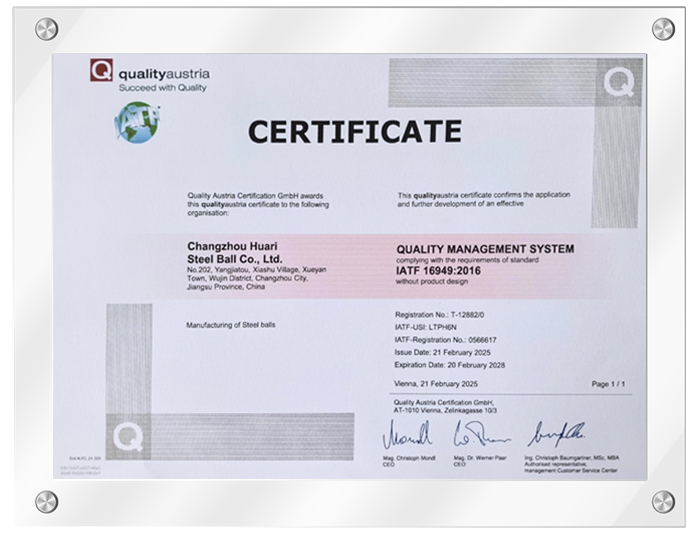
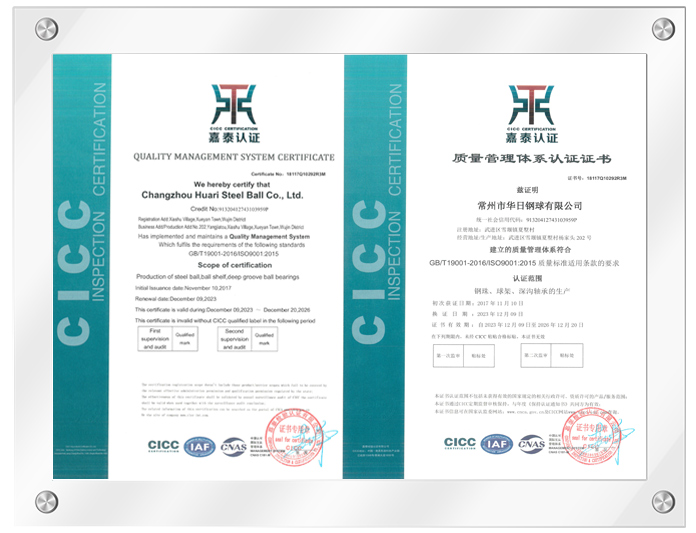
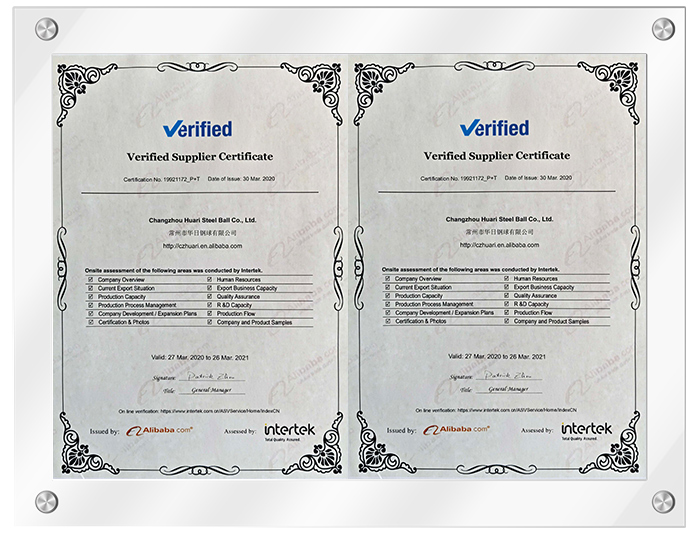
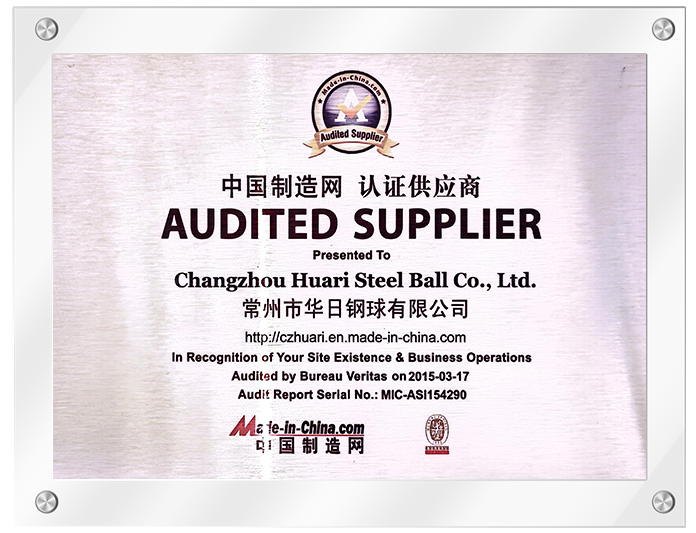
Certifications & Quality

Please Contact Us!

bottom_media_icon1bottom_media_icon2bottom_media_icon3bottom_media_icon4bottom_media_icon5
Subscribe to our newsletter
Promotions, new products and sales. Directly to your inbox.