Borosilicate Glass Balls

Borosilicate Glass Balls

Borosilicate glass balls are widely used in valve, chemical, laboratory and flow-control applications requiring stable thermal performance, smooth surfaces and non-metallic ball solutions.
Also commonly referred to as borosilicate glass spheres or chemical-resistant glass balls for many industrial environments.

Chemical Stability
Thermal Resistance
Smooth Surface
Non-Magnetic & Insulating
WhatsApp Now
WHAT ARE YOU LOOKING FOR?
*
This field is required
Total quantity you need
*
This field is required
*
This field is required
Email format error
Due to email instability, you might miss our correspondence. Please provide your phone number for alternative contact.
This field is required
Telephone information is wrong!
Send Message
Detailed Description

Borosilicate glass balls are commonly used in valve balls, laboratory balls and chemical-resistant ball applications.


Borosilicate Glass Balls

Borosilicate glass balls provide stable chemical performance and improved thermal resistance for valve, flow-control and laboratory applications.

Compared with soda lime glass balls, borosilicate glass balls provide better thermal stability and chemical resistance, making them suitable for many chemical systems and specialized industrial applications.

Borosilicate glass balls are also non-magnetic and electrically insulating, which makes them suitable for applications requiring non-metallic rolling or sealing components.

Due to the brittle nature of glass materials, borosilicate glass balls are generally not recommended for high-impact or high-load rolling applications.

Borosilicate glass balls are commonly selected where chemical stability and thermal performance are more important than mechanical load capacity.

Borosilicate Glass BallsBorosilicate Glass SpheresChemical Resistant Glass BallsLaboratory Glass BallsGlass Valve Balls
Technical Specifications
ItemSpecification
Material Borosilicate Glass
Structure Solid glass ball
Size Range 1 mm – 16 mm (larger sizes upon request)
Grade Depending on ball application requirements
Density Approx. 2.2 – 2.3 g/cm³
Surface Finish Smooth glass surface
Chemical Resistance Excellent resistance to most acids, water and organic solvents. Not suitable for hydrofluoric acid, hot concentrated phosphoric acid or strong alkali environments
Thermal Resistance Good thermal shock resistance. Typical continuous service temperature up to 200–230°C depending on operating conditions
Magnetic Properties Non-magnetic
Electrical Conductivity Electrically insulating
Transparency Transparent or translucent
Design Note More brittle than metallic balls; not suitable for high-impact or high-load applications
Critical Note Compatibility with specific media, especially at elevated temperature, should always be verified
Packing Carton / Plastic bag / Custom
Condition Clean and dry
Delivery Time Stock available for standard sizes or production based
FAQ
What are borosilicate glass balls used for?
Borosilicate glass balls are commonly used in valve, laboratory, chemical and flow-control applications.
What is the advantage of borosilicate glass balls?
Borosilicate glass balls provide better chemical resistance and thermal resistance compared with standard soda lime glass balls.
What is the difference between borosilicate glass balls and soda lime glass balls?
Borosilicate glass balls generally provide improved thermal stability and chemical resistance, while soda lime glass balls are more economical for general applications.
Are borosilicate glass balls chemically resistant?
Yes. Borosilicate glass balls provide excellent resistance to many acids, water and organic solvents. However, they are not suitable for hydrofluoric acid, strong alkalis or hot concentrated phosphoric acid.
Can borosilicate glass balls handle high temperatures?
Yes. Borosilicate glass balls provide better thermal shock resistance and higher service temperature than soda lime glass balls, typically up to 200–230°C depending on operating conditions. Sudden extreme temperature changes should still be avoided.
Can borosilicate glass balls be used in bearing applications?
Borosilicate glass balls are generally not recommended for high-impact or high-load rolling bearing applications because glass materials are brittle compared with metals.
Are borosilicate glass balls magnetic?
No. Borosilicate glass balls are non-magnetic and electrically insulating.
Can you provide custom sizes or specifications?
Yes, custom ball sizes and specifications are available depending on requirements.
Do you provide inspection reports or material certificates?
Yes, inspection reports and material certificates are available upon request.
What packaging options do you offer?
Cartons, plastic bags and customized packaging are available according to customer requirements.
Why Choose Huari Steel Ball?
Factory Direct Value
As a manufacturer since 1986 with an annual capacity of 3,600 tons, we eliminate middlemen, offering you competitive factory-direct pricing and stable lead times.
1
Engineering Expertise
Our team doesn't just sell parts; we provide solutions. We offer CAD/STEP drawing support and technical consultation to help you select the exact clearance (C0/C3) and grease type for your application.
2
Customization Flexibility
Unlike rigid distributors, we support custom modifications, including special internal clearances, non-standard dimensions, and private labeling (OEM).
3
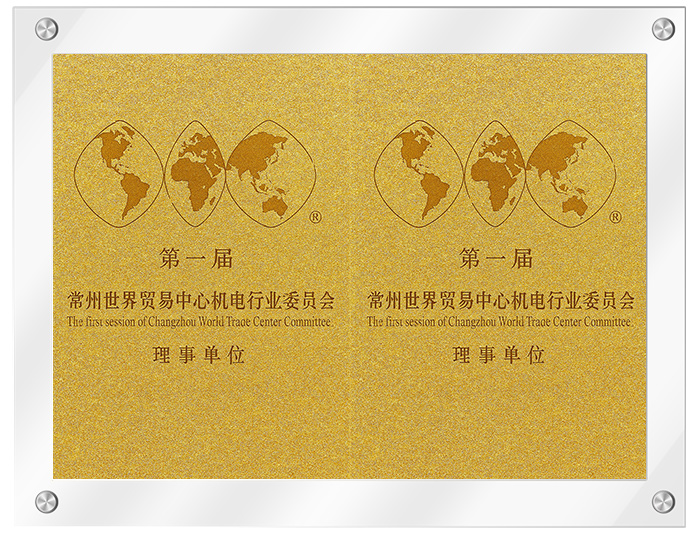
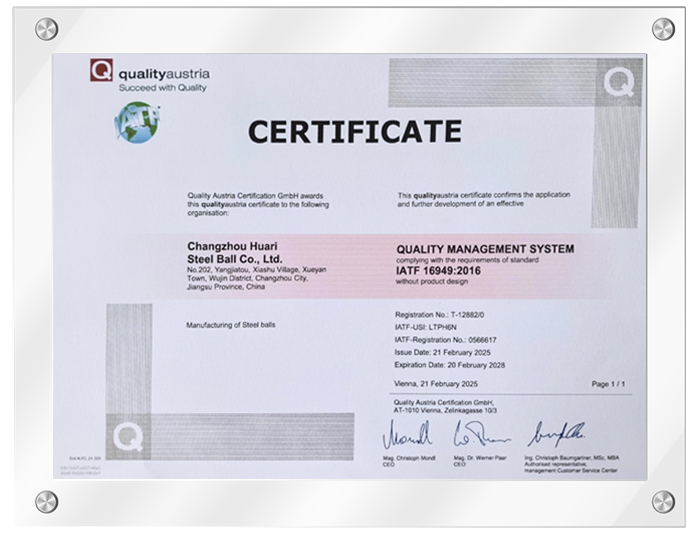
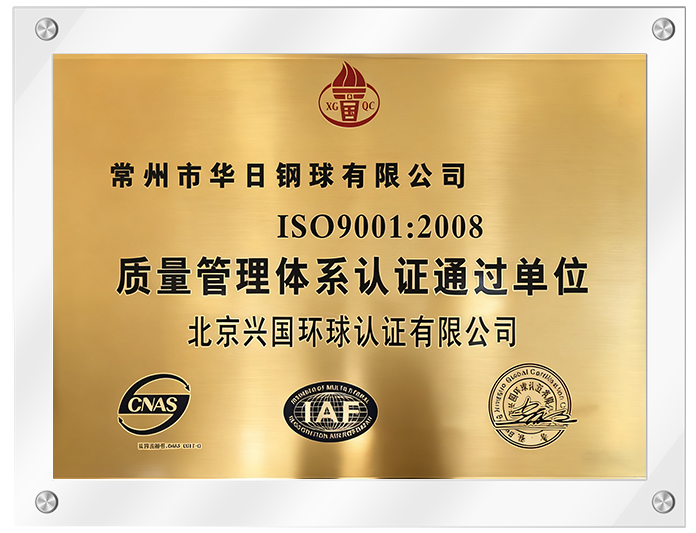
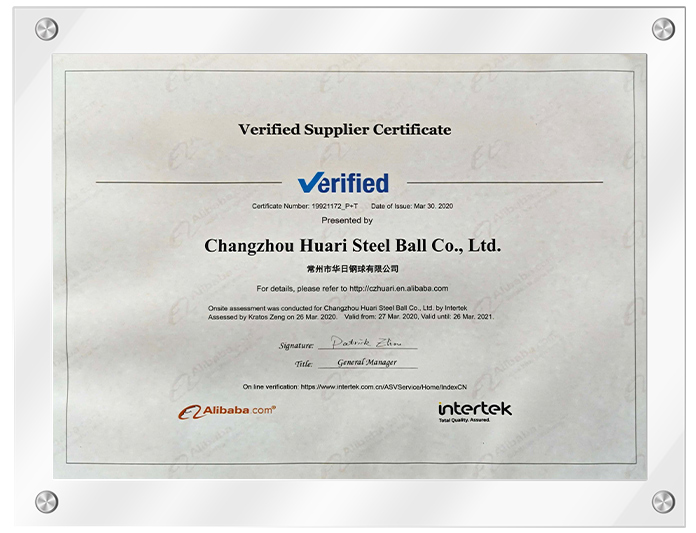
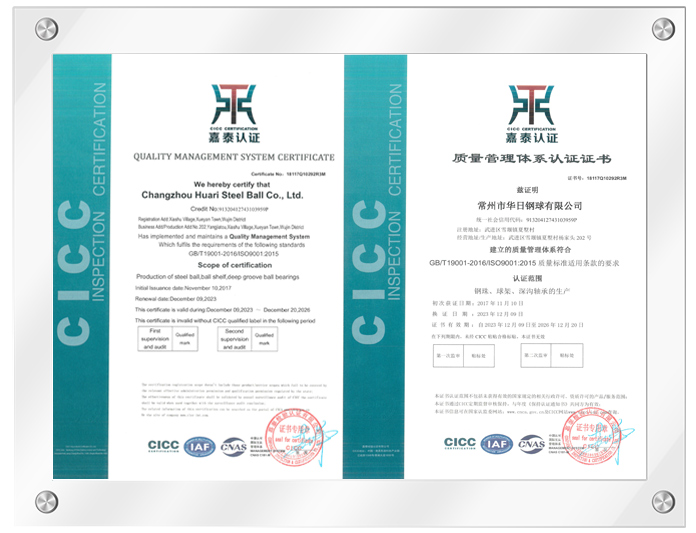
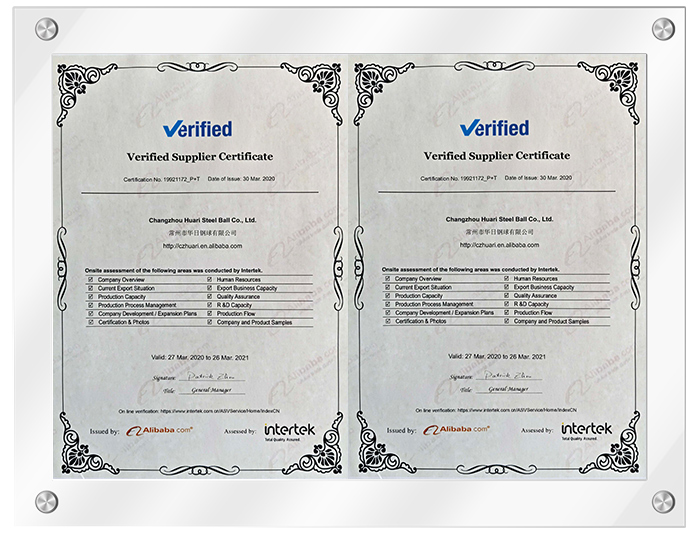
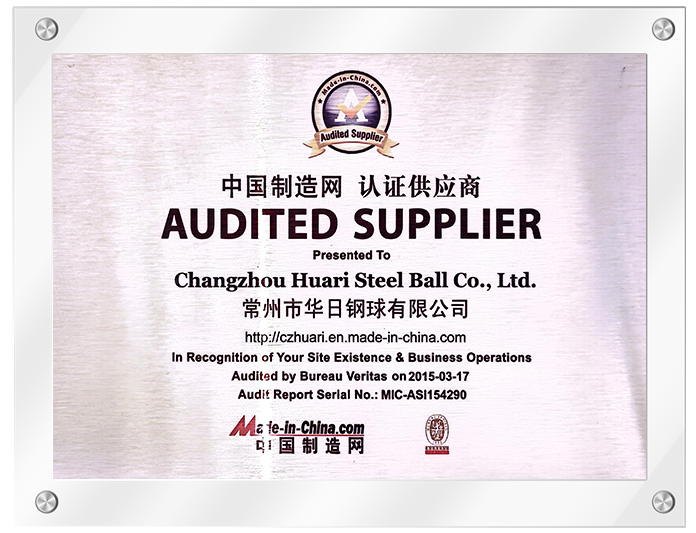
Certifications & Quality

Please Contact Us!

bottom_media_icon1bottom_media_icon2bottom_media_icon3bottom_media_icon4bottom_media_icon5
Subscribe to our newsletter
Promotions, new products and sales. Directly to your inbox.